

NAINUWA: Turning Digital Collections Into Searchable Knowledge
August 17, 2026
How Do You Search Through Thousands of Scanned Pages?
August 17, 2026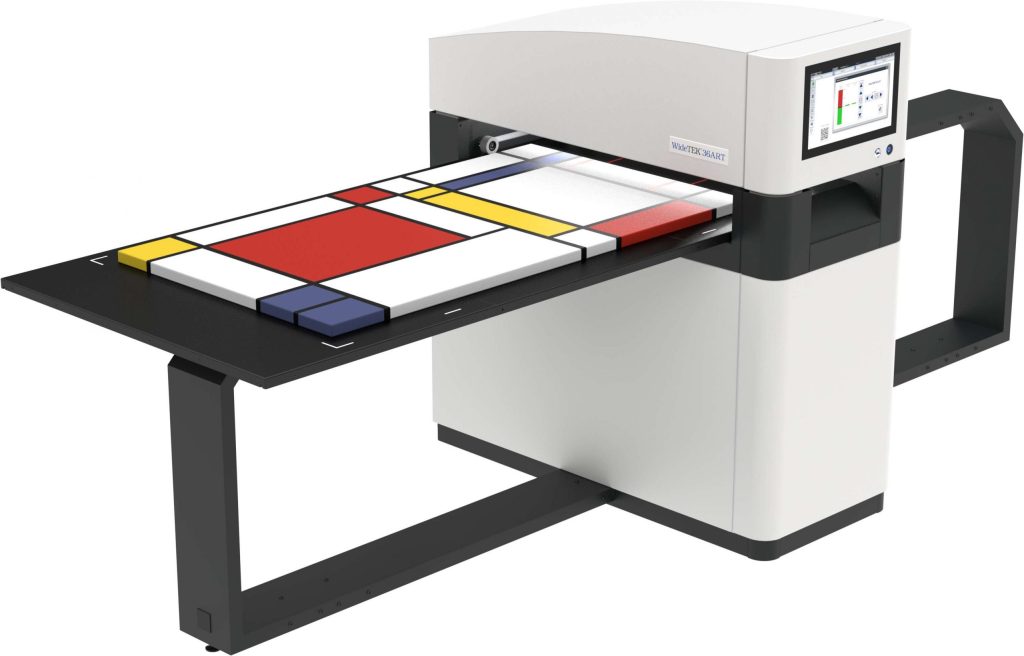
Not every document fits neatly into an office scanner.
Engineering drawings, maps, architectural plans, newspapers, artwork, posters and other oversized materials require equipment designed specifically for their size and condition. Trying to scan these materials with the wrong equipment can result in poor image quality, slow workflows or even damage to valuable originals.
This is where WideTEK scanners come in.
But WideTEK isn’t just one scanner. The current product family includes different models designed for different types of originals and scanning environments.
So, which WideTEK scanner is right for your organization?
What Is a WideTEK Scanner?
WideTEK is a family of professional scanning systems manufactured by Image Access. The range includes flatbed, sheet-feed, fine-art and large-format scanning solutions for organizations that need to capture materials beyond the capabilities of ordinary office scanners.
For organizations in sectors such as engineering, construction, government, libraries, archives, museums and reprographics, choosing the right model largely depends on what you need to scan.
WideTEK 36CL: For High-Volume Large-Format Documents
If your organization regularly handles engineering drawings, architectural plans, maps, newspapers, posters or other large documents, the WideTEK 36CL is one model to consider.
It supports originals up to 36 inches wide and is designed for fast, large-format production scanning. Eemediba highlights applications including CAD drawings, blueprints, maps, newspapers, government documents and archival materials.
This makes it particularly useful for:
- Engineering companies
- Architectural firms
- Construction companies
- Government agencies
- Newspaper publishers
- Mapping and GIS departments
- Reprographic centres
For organizations processing large quantities of wide documents, speed and consistency are often just as important as image quality.
WideTEK 48CL and 60CL: When 36 Inches Isn’t Enough
Sometimes the deciding factor is simply the size of your originals.
The WideTEK wide-format family extends beyond the 36-inch category, with 48CL and 60CL models available for larger materials. Image Access currently offers WideTEK sheet-feed systems across the 36-, 48- and 60-inch range.
These models can be useful when an organization regularly works with very large maps, plans, graphics or other oversized originals.
Rather than choosing the biggest scanner available, however, organizations should consider the typical width and condition of the materials they handle.
WideTEK 36ART and 60ART: For Art and Delicate Originals
Scanning a blueprint is very different from digitizing a painting.
Fine art, historical materials and textured originals may require a scanning process that avoids unnecessary physical contact.
The WideTEK ART family is designed specifically for this type of work. The WideTEK 36ART, for example, can capture fine art without contact and is designed to reproduce details such as surface texture and colour.
Image Access’ current range also includes the larger WideTEK 60ART, expanding the fine-art family for organizations working with larger originals.
These models are particularly relevant for:
- Museums
- Art galleries
- Cultural institutions
- Historical archives
- Universities
- Special collections
- Art reproduction projects
If preservation and faithful reproduction are the priorities, an ART model may be more appropriate than a conventional sheet-feed scanner.
WideTEK Flatbed Models: When Materials Need a Flat Surface
WideTEK also includes professional flatbed scanners.
The current range includes models such as WideTEK 12, WideTEK 25, WideTEK 24F and WideTEK 36F, alongside the specialist WideTEK 12 SPECTRUM.
Flatbed scanning can be useful for originals that should not pass through a sheet-feed mechanism or for applications where placing the material securely on a scanning surface is preferable.
The right choice depends on the size, type and condition of the material being captured.
So, Which WideTEK Model Do You Need?
The answer starts with your documents, not the scanner.
If you mainly handle engineering drawings, maps and plans, a large-format sheet-feed model such as the WideTEK 36CL may be appropriate.
If your originals are significantly larger, the 48CL or 60CL may provide the additional scanning width you need.
If you’re preserving paintings, textured artwork or delicate originals, the WideTEK ART range deserves consideration.
And if your workflow requires materials to remain on a flat scanning surface, one of the WideTEK flatbed models may be a better fit.
Don’t Choose Based on Size Alone
Scanning width is important, but it shouldn’t be the only consideration.
Before investing in a professional scanner, organizations should consider:
- The size of their originals
- The condition and fragility of the materials
- How frequently scanning will be performed
- The volume that needs to be processed
- Required image quality
- Whether colour accuracy is critical
- The intended use of the digital files
Existing digital archive or workflow systems
A museum preserving paintings has very different requirements from an engineering company digitizing thousands of drawings. The right technology should reflect those differences.
How Eemediba Can Help
Eemediba provides professional digitization technologies and services for organizations in Nigeria, including WideTEK solutions for large-format and specialist scanning applications. Eemediba currently features WideTEK products for applications ranging from engineering and architectural drawings to maps, newspapers, artwork and cultural heritage materials.
Rather than simply selecting a scanner based on specifications, organizations can assess the type, size, condition and volume of their collections before deciding which solution best fits the project.
Conclusion
There isn’t one WideTEK scanner that is right for every organization.
The best choice depends on what you are scanning, how much you need to scan and how carefully the originals need to be handled.
For high-volume technical documents, the WideTEK CL family offers large-format options. For artwork and delicate materials, the WideTEK ART family provides a more specialized approach. And for applications requiring flatbed capture, WideTEK offers dedicated flatbed models.
Choosing the right scanner from the beginning can make your digitization project faster, safer and far more effective.