
Should Your Institution Buy an Automated Book Scanner or Outsource the Work?
October 30, 2026
Every year, universities produce valuable research through student projects, postgraduate dissertations, academic publications and faculty studies. These works represent years of investigation, discoveries and ideas that could support future research, influence decisions and contribute to knowledge in different fields.
Yet, in many institutions, much of this work receives little attention after submission. Students graduate, lecturers move on to new projects, and completed research gradually disappears into departmental shelves, office cabinets or poorly organized computer folders.
The university continues producing knowledge, but how much of that knowledge can people actually find and use?
For institutions that invest significant time and resources in research, this is an important question. Preserving academic work matters, but making it accessible is what allows others to build on it.
Valuable Research Should Not End Up Forgotten
Consider a postgraduate student researching a topic that another student explored five years earlier. The previous study may contain useful findings, relevant references or information that could strengthen the new project.
Unfortunately, the student may never discover it.
Perhaps the department keeps a printed copy in its library, but the student does not know it exists. The university may also have a digital copy, but without a searchable system, finding the document becomes almost as difficult as locating the physical version.
As a result, students may repeat work unnecessarily, overlook useful findings or struggle to understand what researchers within their own institution have already accomplished.
Universities should make it easier for students and lecturers to discover existing research before beginning new projects. This encourages better academic work and helps institutions make fuller use of the knowledge they already possess.
Storing Research Digitally Is Not Enough
Many universities have started converting printed dissertations, theses and other academic documents into digital files. Others already receive student projects electronically.
While this is a positive step, saving documents on a computer or shared drive does not automatically make them accessible.
Imagine a university storing thousands of research papers in folders labelled by department and year. Someone searching for a particular topic may still need to open several folders and examine individual files before finding relevant material.
The challenge becomes greater when documents have unclear filenames, incomplete information or inconsistent organization.
A useful research collection needs more than digital storage. It requires a structured system that helps users search for materials by title, author, subject, department, publication year and other relevant details.
When universities organize their research properly, they make it easier for people to find information without depending on someone who knows where every document is kept.
Can Researchers Discover Work Beyond Their Department?
Research rarely exists in isolation. A study in agriculture may interest environmental scientists, while findings from a public health project may provide useful insights for researchers in economics, education or social sciences.
However, when departments manage their research collections separately, these connections become harder to discover.
A student may search only within the faculty library, unaware that another department holds materials relevant to the same subject. Lecturers may also miss opportunities to build on research conducted by colleagues elsewhere in the institution.
A centralized institutional repository can help universities bring approved research outputs together in one organized environment.
Rather than searching through disconnected departmental collections, authorized users can explore research across faculties and discover materials that support their work.
This creates opportunities for wider academic engagement and encourages institutions to treat research as a shared resource rather than a collection of isolated departmental records.
Make Your University’s Research More Visible
Research can contribute more when people beyond the institution can discover it.
Universities that make eligible research available through well-managed digital repositories can help prospective students, academic collaborators and other researchers learn more about their work.
For example, a researcher looking for studies on a particular subject may discover a relevant dissertation or faculty publication through an institutional repository. That discovery could lead to further reading, academic discussion or collaboration.
However, visibility requires careful planning. Universities need accurate metadata, clear access policies and appropriate technical configurations that allow search engines and academic discovery services to find permitted content.
Institutions must also respect copyright, publisher agreements, confidentiality requirements and any restrictions that apply to particular research materials.
The goal is not to make every document publicly available. It is to ensure that valuable research reaches the right audience under appropriate access conditions.
What Happens to Research Ten or Twenty Years From Now?
Research preservation is another important responsibility universities must consider.
Printed documents can deteriorate, storage spaces can become overcrowded, and digital files may become difficult to retrieve when institutions change computers, software or administrative systems.
Without a reliable preservation strategy, universities risk losing access to work that could remain valuable for decades.
A well-managed digital repository can support long-term access by keeping research materials organized, maintaining accurate records and helping institutions manage their collections consistently.
However, universities must also plan for secure backups, file integrity checks, suitable file formats and future technology changes. These measures help protect research beyond the immediate needs of current students and staff.
Preserving academic knowledge should be an ongoing institutional responsibility, not something universities consider only when documents become difficult to find.
How NAINUWA Can Support University Research Collections
For universities managing growing volumes of academic work, a structured digital archive system can help bring order to their research collections.
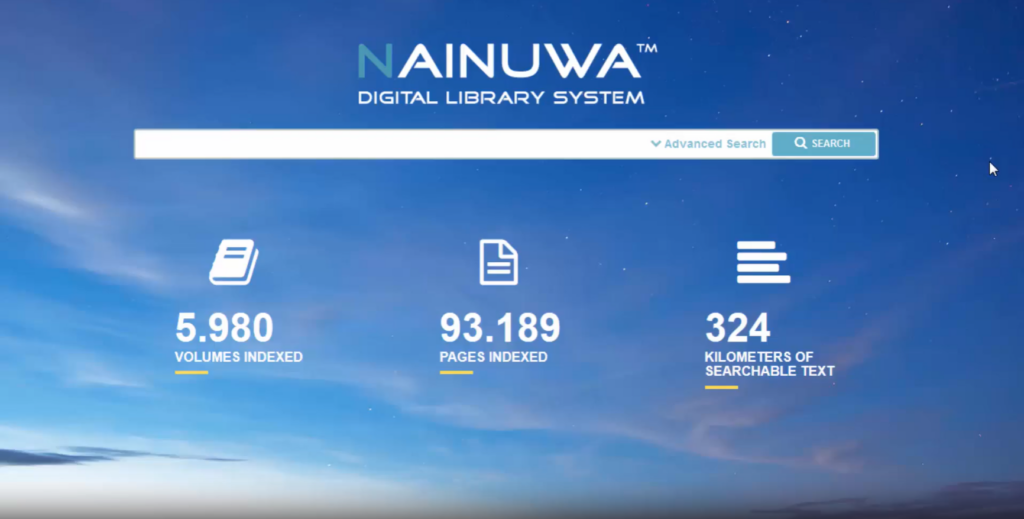
NAINUWA Digital Archive System, offered by Eemediba, supports the organization and management of digital resources, helping institutions build collections that users can explore and search more easily.
Universities can use a digital archive approach to organize dissertations, theses, publications and other approved academic materials while providing structured access to their collections.
Eemediba also provides digitization solutions that can help institutions convert existing printed research materials into digital formats, creating opportunities to bring older academic work into their digital collections.
The important step is to connect digitization with proper organization, accurate descriptions and a clear plan for how students, lecturers and researchers will access the materials.
Give Your University’s Research the Attention It Deserves
Universities invest years in developing knowledge through teaching, investigation and academic research. That investment should continue to benefit future students, researchers and the wider academic community long after the original work is completed.
By organizing research into accessible digital collections, institutions can reduce unnecessary duplication, encourage new discoveries and preserve valuable academic contributions for future generations.
A university’s research should not become difficult to find simply because the students who produced it have graduated or the lecturers who supervised it have moved on.
Your institution has spent years building knowledge. The next step is making sure people can find it, learn from it and build something greater with it.