
Your Company Has a Contract Renewal Coming. Who Is Keeping Track?
October 16, 2026
Your University Has Years of Research. Why Is Nobody Finding It?
October 30, 2026
A university library needs to digitize thousands of books. Students frequently request some of these books, while others contain valuable research materials. Everyone agrees that making these collections available digitally is important, but one question remains: should the institution invest in its own scanning equipment or hire a company to handle the project?
It is a decision many libraries, universities, archives and research institutions face. Buying an automated book scanner offers greater control over the digitization process, while outsourcing allows an institution to benefit from professional equipment and expertise without purchasing the machines itself.
Neither option is automatically better. The right choice depends on the size of the collection, how often the institution needs to digitize new materials, the condition of the books and the resources it has to manage the work.
When Buying an Automated Book Scanner Makes Sense
For institutions with a continuous need to digitize books, owning scanning equipment can be a practical long-term investment.
Consider a university library that regularly receives new publications, research materials and donated collections. Even after completing its existing digitization backlog, the library may still have hundreds of additional books to process every year.
In this situation, purchasing an automated book scanner allows the institution to establish an internal digitization programme rather than arranging a new service contract whenever more books need attention.
Automated systems such as ScanRobot are designed to support high-volume book digitization by reducing repetitive manual tasks, including page turning and image capture for suitable books. This can help institutions process large collections more efficiently while allowing trained operators to oversee the workflow and maintain quality standards.
Owning the equipment also gives the institution more control over project schedules, scanning priorities and the handling of its materials.
However, buying a scanner is only the beginning. The institution must also consider staff training, maintenance, technical support, workspace requirements and the processes needed to manage the digital files produced.
When Outsourcing May Be the Better Choice
Not every institution needs to own professional scanning equipment.
A library with a one-time project involving a few thousand books may find it more practical to work with a specialist digitization provider. Once the project is completed, there may be little reason to maintain expensive equipment that will only be used occasionally.
Outsourcing can also be helpful when an institution lacks trained scanning personnel or needs to complete a project within a specific timeframe.
An experienced provider can manage activities such as book preparation, scanning, image quality checks and file organization, depending on the agreed scope of work.
However, institutions should carefully evaluate potential service providers. Important considerations include how books will be handled, where the scanning will take place, what quality standards will apply and how the completed digital files will be delivered.
For rare, fragile or confidential collections, the institution may also need to consider whether the materials can safely leave its premises.
The Cost Is More Than the Price of a Scanner
One of the biggest mistakes institutions make is comparing the purchase price of a scanner with an outsourcing quotation without considering the full cost of each option.
Buying equipment involves an initial investment, but there are also ongoing expenses for staffing, training, maintenance and quality control. Outsourcing may reduce those responsibilities, although service charges can increase with the number of pages, complexity of the materials and additional processing requirements.
A useful comparison should consider the total cost of completing the project and the institution’s expected digitization needs over the next several years.
For example, an institution with 20,000 books to digitize and a steady flow of new materials may benefit from owning equipment over time. Another institution with 2,000 books and no plans for further digitization may achieve better value by outsourcing.
These figures are illustrative rather than fixed thresholds. The actual decision should be based on supplier quotations, expected scanning volumes and realistic operating costs.
About the Condition of the Books?
The number of books matters, but their physical condition is equally important.
Automated book scanners are not suitable for every type of material. Books with delicate bindings, damaged pages or unusual physical characteristics may require more careful handling than an automated page-turning process can provide.
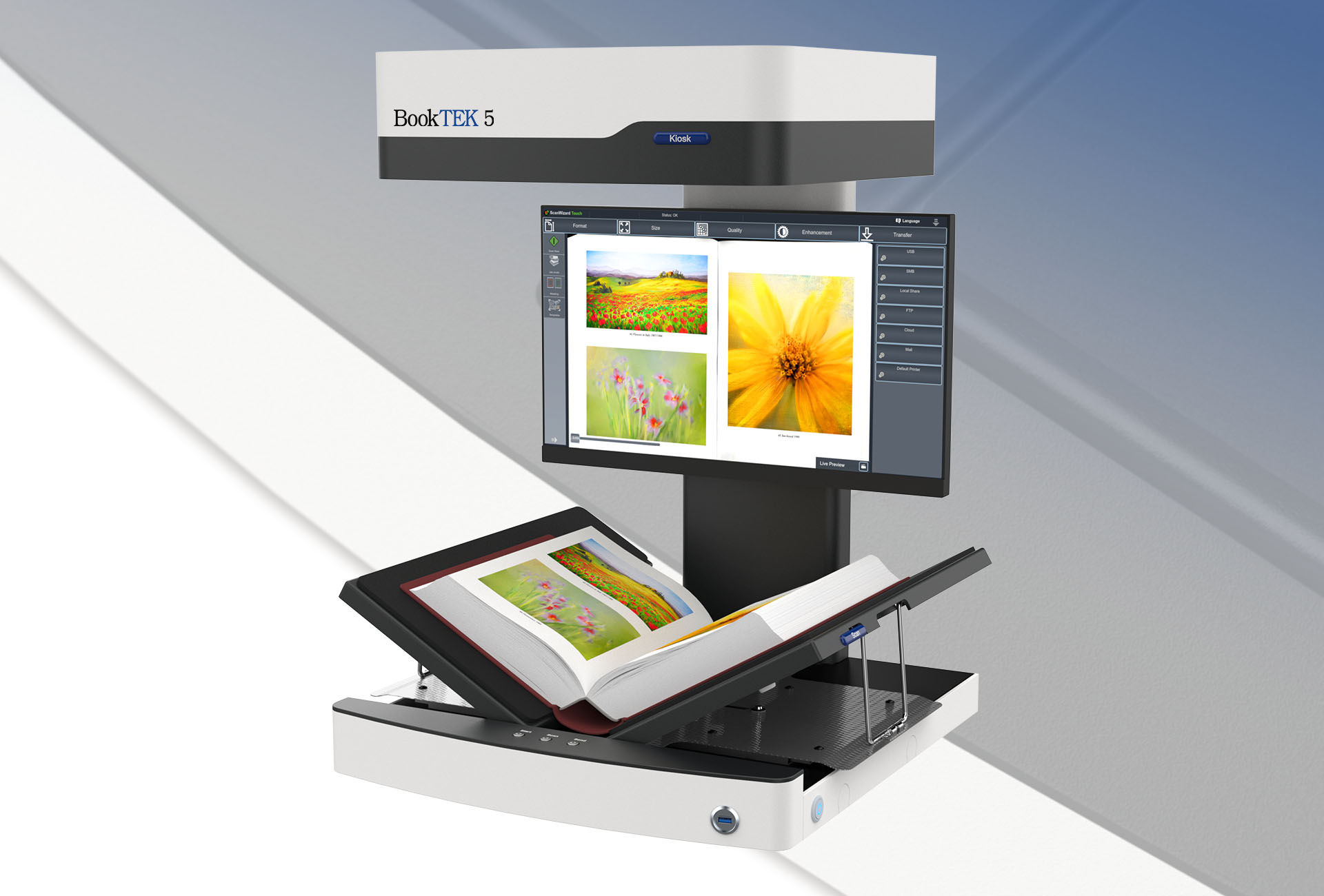
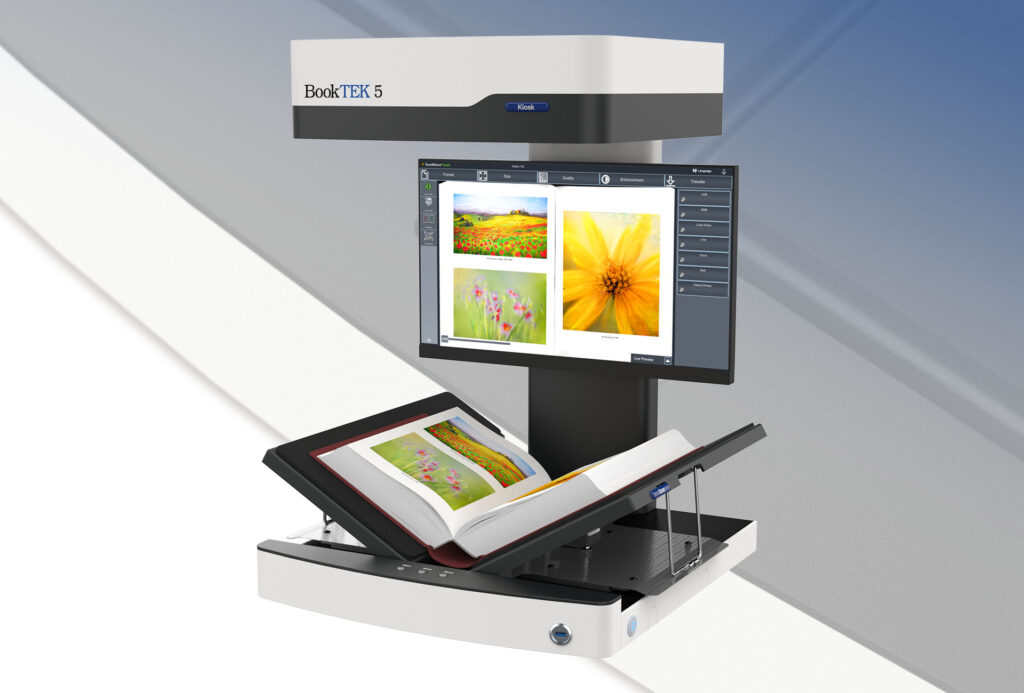
Professional overhead book scanners such as Bookeye can be useful for materials that require controlled positioning and reduced physical stress during scanning.
Before purchasing equipment or outsourcing a project, institutions should assess the types of books in their collections. A sample evaluation can help determine which materials are suitable for automated scanning and which require a different approach.
This assessment can prevent costly mistakes and protect valuable materials from unnecessary damage.
Can Your Institution Combine Both Approaches?
Buying equipment and outsourcing do not have to be competing choices.
Some institutions may benefit from establishing an internal scanning operation for routine materials while outsourcing unusually large projects or collections that require specialist expertise.
For example, a university could use its own book scanner to digitize newly acquired materials throughout the year, then engage a professional provider to handle a large historical collection within a shorter period.
This approach allows the institution to maintain an ongoing digitization programme without placing every project on its internal team.
It also creates flexibility when workloads change or materials require equipment the institution does not own.
Don’t Forget What Happens After Scanning
Whether an institution buys a scanner or outsources the work, the project should not end with thousands of image files stored on a computer.
The completed materials need to be checked for quality, organized properly and made accessible to the people who need them. Depending on the collection, optical character recognition (OCR), metadata and searchable digital archives may be necessary to make the scanned content useful.
A digital archive system such as NAINUWA can support the organization and management of completed digital collections, helping institutions provide structured access to their resources.
Planning these requirements before scanning begins is important because the desired digital output can influence equipment selection, service costs and the overall workflow.
How Eemediba Can Help
Choosing between purchasing an automated book scanner and outsourcing a digitization project requires a clear understanding of the institution’s collection, available resources and long-term objectives.
Eemediba provides ScanRobot automated book scanning solutions, Bookeye professional book scanners and digitization services to support institutions with different scanning requirements.
By assessing the volume and condition of materials, expected project timelines and future digitization needs, institutions can identify an approach that balances efficiency, cost and the careful handling of their collections.
Make the Decision Based on Your Long-Term Needs
An automated book scanner can be a valuable investment for an institution that needs to digitize materials regularly. Outsourcing may be more economical for occasional projects or when specialist equipment and expertise are required for a limited period.
What matters is choosing a solution that fits the work rather than investing in equipment simply because it is available or outsourcing without considering future needs.
The best decision is not necessarily the one with the lowest initial cost. It is the one that helps your institution preserve its collections, manage resources responsibly and make valuable information accessible for years to come.